Any displeased premises in winter becomes unsuitable for a comfortable life in it, moreover, it threatens the speedy damage of the material of the walls, internal and exterior finishes, since the lack of insulation will lead to condensate formation. In the case of an attic situation, the situation is still fatal - since the room is located on the very last floor under the roof, then all the flooded air from the house will rise there and ... freely go out. Thus, you will not be able to use the attic for housing, nor how to protrude the house. So that this does not happen, when building the attic you need to immediately take care of it with insulation, and in this article we will tell you how to do it.
Content
Selection of thermal insulation material for attic
Taketing for the insulation of the attic, one should realize that this room will always be colder than those located below, since there is no "heat pillow" above it. For this reason, heat-insulating works need to take maximum attention, ranging from the choice of material, ending with compliance with the technology of its installation. On the modern construction market, you can find a lot of good insulation, but in most cases the owners are looking for something cheaper, guided by this factor only. Fortunately, there are some good options for economical construction.
Consider the most popular insulation:
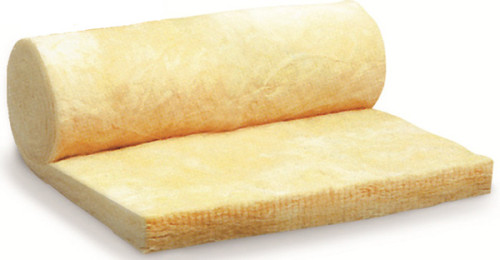
- Glasswater - Let's start with the cheapest insulation. Fiberglass material does not burn and does not support burning than all the rules of fire safety satisfies. It does not contain harmful chemicals or organic matter, and as for thermal conductivity, it is rather low, unless, of course, lay the material correctly. The only serious lack of glass gambles - it is difficult to work with it. To do this, you will need to completely close all parts of the body, put on the glasses and the respirator, because if the material particles fall on the skin, mucous or in the respiratory tract, it will cause strong irritation. Remember - if you decide to insulate the attic cheap glass, you will have to spend on protection.
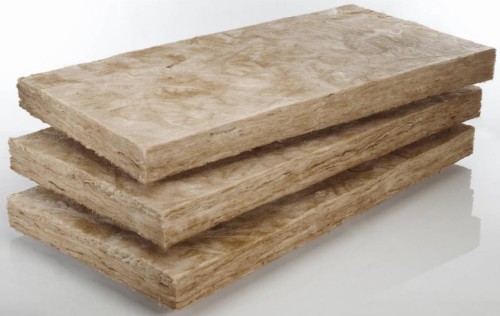
- Mineral wool - this material, unlike the glass gamble, is not dangerous for a person and does not cause skin irritation at contact. In addition, the indicators of heat shields are higher, and it is not much more expensive at the same time. Mineral wool, as can be guessed by the title, consists of minerals, that is, rocks, recycled and turned into thinnest fibers, compressable. This method of production allows to obtain a rather lightweight and convenient insulation with low thermal conductivity. Plus, she has good indicators of noise protection, therefore it is often used for sound insulation of plasterboard partitions. On sale mineral wool can be found in rolls or stoves (plates are more expensive). Rolled materials will be convenient for the insulation of the floor of the attic, and slab - walls and ceiling. The insulation of the mansard of Minvata is good and because the material, roughly speaking, is made of stones, so it does not burn and does not support the burning. At the same time, it is rather durable and elastic, so the plates can be squeezed between rafters and not to strengthen additionally.
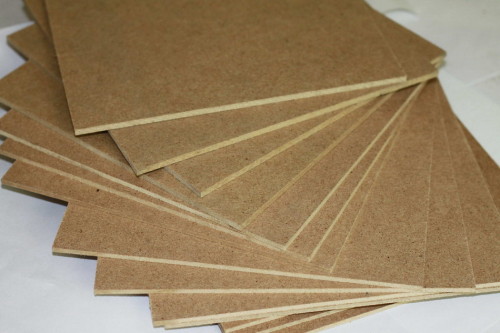
- Fiberboard - this material most often serves as a thermal insulator for the attic, built above the baths or saunas. With plates just work, and over time they are not deformed. Since the Feds have a completely smooth surface, it allows you to save on alignment before the finish finish. Unfortunately, thermal insulation is quite weak, therefore, for residential premises, the material does not use or make combined insulation with its participation, for example, Minvat + Fiberboard or Polyfoam + Fiberboard.
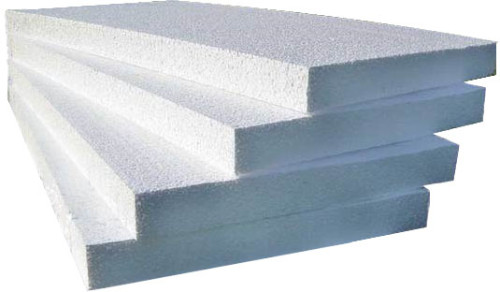
- Polyfoam is a completely universal material that is actively used for insulation of anything. Depending on the thickness and density, it may have a different coefficient of thermal conductivity. The usual foam is very inexpensive, it's easy to work with it, it does not burn, but it does not "breathe", needs good waterproofing and serves no more than 15-20 years. Despite this, the insulation of the attic of the mansard foam is common practice. However, more modern derivatives, such as extruded expanded polystyrene foam and durable. They cost more than the conventional foam, but they are much lower thermal conductivity. In the article "Technology insulation expanded polystyrene" You can find a lot of useful information.
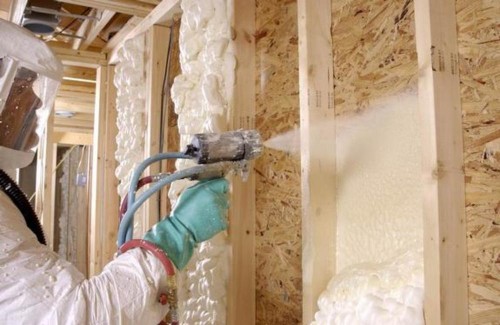
- Polyurethane foam is a highly efficient thermal insulation material that is suitable for high-quality insulation of any surfaces, even uneven. Unfortunately, with their own hands, the insulation of the attic of the mansard is impossible to polyurethane foam, since it is applied with a spraying, and for this you need a special technique and the skills of handling it. But as a result, you get a monolithic layer of insulation that is not afraid of moisture, dampness and thickness is a few centimeters, so you do not lose the precious square, as in the case of foam or mineral wool, if you warm up from the inside.
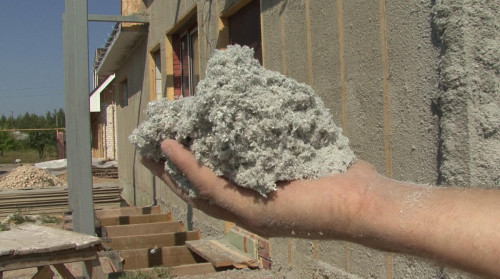
- Equata is another sprayed insulation, which will give reliable and durable protection from the cold and heat. The most important quality material is environmental friendliness. According to the properties, it resembles natural wood - does not prevent the microcirculation of air, does not contain harmful chemicals, not deformed during operation. Equata is made of recycled paper and is absolutely safe for the health of people, animals and the environment.
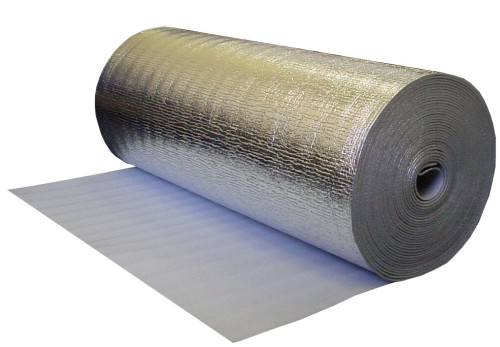
- Foil materials are a number of insulation, one or two sides of which are covered with foil. It serves to reflect the heat back to the room, so if you bought one-way stuff, lay it with an aluminum layer inside. It is important to comply with the same rule: between the inner cover (drywall, plywood, fiberboard) and the insulation need to paro insulation and leave the gap of 3-5 cm so that the condensate can freely evaporate. If you use a double-sided membrane, the gap can be reduced to 1 cm.


Technology of mansard insulation
It is necessary to choose the heat insulating material, repulse not only from its financial capabilities, but also on the method of insulation.
In the case of an attic, this can be done in several ways:
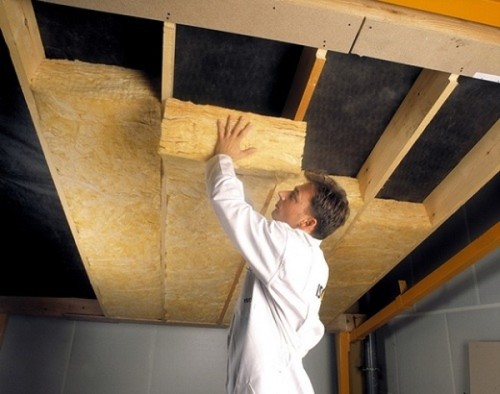
- To put the insulation between the rafters is the easiest way to insulate the attic of the attic from the inside. To do this, mainly use slab materials, such as polystyrene foam, foam or minvatu. It is enough to fasten the insulation between the rafters and at the same time you will get a ventilation gap between the roof, heat and waterproofing layers. If you use this method, consider that the thickness of the insulation slabs must correspond to the thickness of the rafter. In this regard, mineral wool is most convenient because it can shrink.
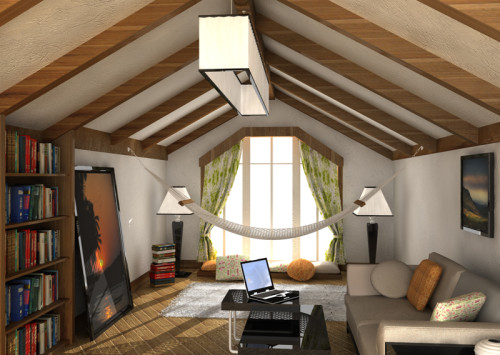
- To put the insulation above the rafters - this way will allow you to save the useful space inside the attic and use rafters as the original interior decoration.


Warming roof attic
Since almost always the roof of the attic room has several slopes under a slope, it is necessary to warm them with a material that is not deformed over time and with which it is convenient to work at the height. Rolled mineral wool for this is not entirely suitable and better use slab materials.
For high-quality insulation of the roof of the attic from the inside, insert the plates between the rafters or above the rafters. In the second case, the laying of the crates will be required. If you live in the region with a cold climate, you can make an additional heat shield, setting the plates and under rafters (they are also attached to the crate). If the widths of the plate are not enough to fill the entire space between the rafters, and there is a small gap, fill it with a segment of a similar material, adding 2-3 cm in width to squeeze it back. Over time, any material gives shrinkage, so it is necessary to immediately compensate for this distance.

Useful advice: Special attention should be paid to the thermal insulation of the skate, endands and soles. In these places, the risk of leaks and the formation of cold bridges is always large, since the plane of the roof changes its shape. Risk places also include roof intersection points with walls and window openings.
Overlap of mansardes
The house with the attic floor can be erected with one of the two types of overlap: reinforced concrete or wooden. If there is reinforced concrete floors in your house, and the floors are covered with tiles or bulk, it is necessary to use a particularly durable thermal insulation material. In addition to the strength, it should have a high level of protection against noise, therefore, for such cases, the optimal option will be extruded polystyrene foam. Also suitable sprayed thermal insulation, but do not cope with such work with such work.
If the overlaps in the house are reinforced concrete, but semi-day-free on lags, basalt mineral wool material in the stoves are perfectly suitable as the insulation. In the corners of the attic it is recommended to leave small ventilation holes. And so that foreign noises do not penetrate through the overlap, the lags should be installed on special elastic gaskets from noise absorbing material.

If you live in a fully wooden house with the wooden floors, above or under them it is necessary to build a draft floor to put the insulation. At the same time, the draft floor should not be fixed, so that during the shrinkage at home and seasonal plasters of wood they "went" and did not deform. Save the boards, put the construction of polyethylene on them, and on top of it - insulation. From above, too, it is also advisable to lay a film so that if you break water to the floor, it does not damage the heat insulating layer. Next, such a draft floor can be covered with moisture-resistant plywood sheets and lay the finishing layer: laminate, parquet, linoleum, carpet, etc.

With the insulation of the floor to cope easier. To do this, you can use cheaper rolled insulation, rolling the material over the entire surface close to lags.
Warming of Fronton Mansardes
It is also one of three ways to insulation, depending on the design features of the building. For example, if the house is erected using layered masonry, the thermal insulation material must be placed inside this masonry. Outside the facing will be located, and inside the carrier wall. For such work, the best option will be basalt wool in the plates. On both sides, it is recommended to lay vaporizolation (at least elementary from pergamine) to prevent the wetting of the insulation by condensate.

If the house is built using the technology of the "ventilated facade", also use basalt wool slabs. Between the insulation and the inner side of the facing, it is necessary to withstand a distance of at least 4 cm (up to 15 cm). To do this, over thermal insulation fasten the crate of wooden beams or rack aluminum profiles. This ventilation gap does not only contribute to effective evaporation of condensate, but also creates an additional airbag that enhances the thermal protection of the house.
Useful advice: If you decide to warm the frontton foam, it will be useful for you. "The insulation of the facade of the house with foam".

If the fronton is plastered, it can be insulated with polystyrene foam or stone slabs, since it is important to create a solid and geometrically stable surface. If the insulation of the monsard walls is impossible, it will have to work from the inside. However, this should take into account the displacement of the dew point inside the walls. This means that the insulation will need additional hydro and vaporizolation to prevent condensate accumulation. Also, with internal insulation, it almost always has to sacrifice the space, and the scale of these victims will depend on the selected insulation and the technology of its laying. In the case of mineral wool slabs, you will need to first attach the windproof membrane, vaporizolation, insulation, then build a crate and to nourish the plasterboard or Phane to begin to begin in the interior. Between the inside of the crate and thermal insulation, it is necessary to leave the gap of 3-5 cm. In any case, insulation from the inside is undesirable and must act as the last option when the outer insulation is impossible for any reason.
Finally, we suggest familiarizing yourself with the useful video about the insulation of the attic and its full arrangement: