Explosion-proof luminaires are special lighting devices that are designed to work in explosive areas. Like other explosion-proof equipment, such lamps differ from the usual specific design - a durable hermetic case, a protective grid, heat-resistant glass and other. For which such lamps are needed, what kind of types and features of their application we will tell in this article.
Content
Specifications
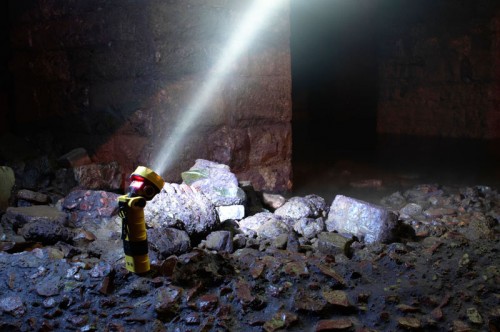
Explosion-proof lamps are designed specifically in order to ensure the proper level of lighting in potentially explosive rooms. So, they are used at gas stations, mines, fields of oil platforms, laboratories, storage facilities. The use of any other lighting devices in such places is considered a violation of the safety rate.

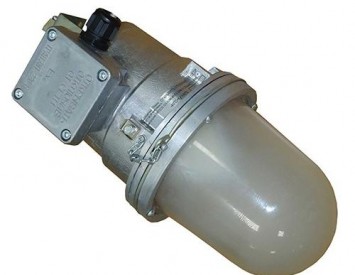
Their main distinguishing feature of ordinary lighting devices is a very dense connection of parts made, in turn, from high-strength fireproof materials. The shell of such lamps is able to withstand the colossal temperature and pressure, the design provides a smaller gas ignition temperature, the thermal mode of explosion-proof luminaires occurs in such a way that the temperature of the outer parts never exceeds the allowable value (not heated). Thus, such elements of lighting can not provoke the emergence of a fire hazardous situation.
Application area
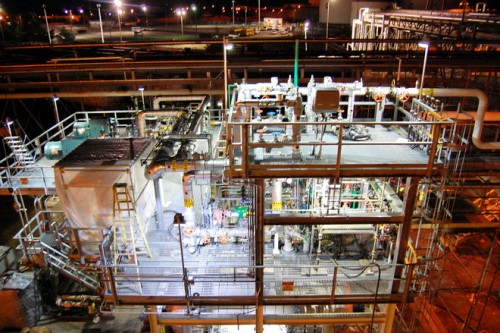
At objects with increased explosion hazardous, the use of explosion-proof lamps is required, otherwise security requirements are violated. Such zones and objects include all enterprises of the oil processing industry, including filling stations, as well as the venue sites, military polygons, plants producing combustible substances or any paints and varnish materials.

If you are planning to buy explosion-proof lamps, it is necessary to approach the choice, considering the specifics of the room and the design of the device itself. It is the lighting that gives people not only safety and comfort of movement, but also a safety sense. It is laid on the subconscious level, as a person will always go from the darkness to the light, believing that there is heat and protection. Explosion-proof lamps can provide just such protection and comfort, and in an extreme situation even save lives.
It should be understood that these are not just elements of lighting, but the most important factors from which not only the productivity of employees may depend on, but their life and fate of production as a whole.
Peculiarities
What factors allow explosion-proof luminaires smoothly to work in the most extreme situations when ordinary industrial lamps are completely out of order? The fact is that, in contrast to ordinary devices, these lamps are made of incredibly durable materials fastened by a special way. The housing, for example, is made of polycarbonate, and reflectors - from sheet steel, which helps to maximize the safety of people working at the enterprise.
Protection against mechanical damage is provided by a strengthened case. As a rule, most of such lamps are made of heat-resistant glass. All their parts are connected very tight, so during an explosion or fire they can withstand aqueous high pressure and temperature. It is a sharp increase in pressure that displays the lighting element, and the design of the lamp reduces the risk to zero.

Also, the merits of the design is to provide a smaller temperature of the gas ignition and a special thermal regime, in which the outdoor parts of the lamp are heated. Thus, the risk of fire hazardous situation is excluded. Plus, the wiring is also placed in a special way - it is protected by a special cover, so even if a short circuit happens, the occurrence of the explosion is practically excluded.
How to choose
Today the nomenclature of explosion and fireproof lamps increases and is replenished with new specimens every day. Lighting specialists are constantly upgraded by lamps and are studying innovative ways to illuminate explosive zones. That is why inexperienced person is very difficult to figure out in an incredible variety of models.
What is guided by choosing such specific lighting:
- First of all, the choice should be determined by the classes of zones in which lamps will be used. It is from the correctness of this choice that the optimal cost, efficiency and reliability of lighting will depend on.
- The complexity of the design is all kinds of protective devices (grids, glass, lattice, etc.) and their strength directly affects the efficiency efficiency and their lighting indicators. Before purchase, carefully read and appreciate the factors that determine the efficiency and quality of electrical lighting. For example, if the warehouse requires a bright light in stock, then buy a lamp, "packed" into thick glass and a lifestyle will be inappropriate. If a few light is sufficient for normal functioning, for example, to see the path in the corridor or mine, then here you can use the lamp described above.
- For class B-PA and in-H, it is better to use lamps for explosive zones, as well as a mixture of fibers, air and combustible dust.
- For the B-1 zones, an analogues of explosion-proof lamps can be used, which are used to work in rooms with unstable gas, vapor and air mixtures.
- For the B-PA ranges, it is permissible to use general purpose lamps if a special protective sheath is provided for them, which does not pass the dust inside the housing.
- Regardless of the class of the zone, the degree of protection of the lamps should be at least pr54.

When buying any lamp, it must be provided with a certificate in which the operational and design characteristics should be displayed. The price of explosion-proof luminaires directly depends on the specifics of use.
Classification and species
Explosion-proof lamps are characterized by two safety indicators, which are displayed on the body or packaging:
- The type of "D" - deciphered as the "blastness of the shell".
- The view "S" - decoded as a "special type of explosion protection" and is used for the introductory box of the device. This species shows the degree of protection of the type "E" and the requirements of protection against the effect of the IP67 external environment.
With this form of protection, the cable cannot get into the blasting shell, which is a significant advantage for the consumer, because the real life protection and maximum positive performance is ensured simultaneously. If the cable is entered directly into the shell of the housing or the introductory box of the lamp, then almost all responsibility falls on the shoulders of the consumer itself.
Separation by labeling
The following types of applications of explosion-proof lamps are distinguished:
- 1st level (1EX ...) - used where the second-level lamps can be used (2EX ...).
- IIC category - are used where the lamps of category IIB can be used.
- The high temperature class lamps are used where the simultaneous use of a smaller temperature class lighting appliances is permissible. So, T6 lamps can be used where there are T5, T4, T3, T2 and T1 lamps, and so on. T2 lamps can only be used in conjunction with T1.
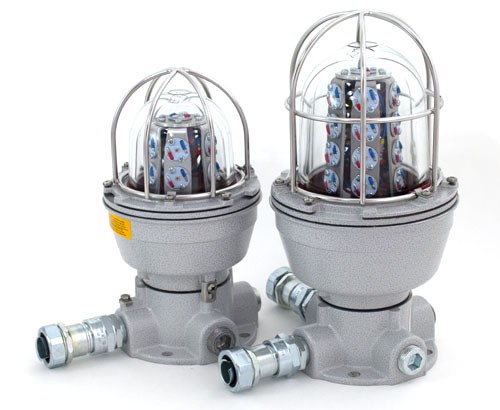

There is also a certain marking according to GOST 15150, denoting the possibility of using explosion-proof lighting devices in macroclimatic zones with a marine climate (on the coast, rivers or lakes):
- Y - moderate;
- Chl - cold;
- Uhl - moderate cold;
- T - tropical dry and wet;
- TV - tropical wet;
- TS - tropical dry;
- TM - tropical marine;
- About - obscheklimaticheskoe execution (all macroclimatic area on land but very cold);
- M - moderately cold sea;
- OM is moderately cold and tropical marine (used on ships of an unlimited diving area);
- B - suitable for all zones on land and in the sea, except very cold.
Separation of op type of light source
Also, explosion-proof lamps can be divided by the type of light source:
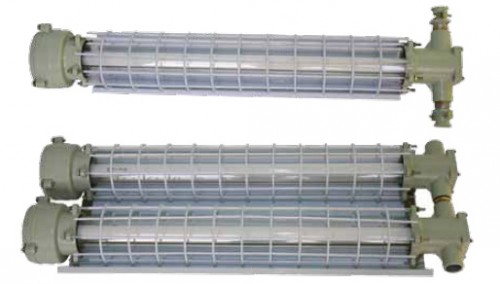
- Luminescent is the main advantage of such lamps consists in their economy, safety and durability. In the process of producing such devices, a special "blastproof shell" is used, which is an explosion protection electrical part (lamp), isolated from the possibly adverse effect of the external environment. Thus, the possibility of destabilizing the work of the luminescent explosion-proof lamp is excluded.
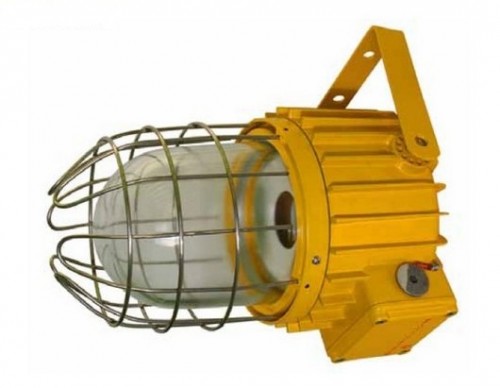
- Incandescent lamp - explosion-proof lamps for incandescent lamp consist of a durable aluminum case, have a built-in cartridge and a heat-resistant shockproof borosilicate glass cap. The protective cap is attached to the body with a thread.
- LED - differ in special protection against shocks and mechanical loads, voltage drops and adverse climatic exposure. Since special requirements are presented to such lighting devices, their design must be adapted to work in rooms with hazardous or harmful production. Also, LED explosion-proof lamps are used to illuminate buildings or for street lighting. This species is most common and used not only at industrial enterprises, but also in offices, on the streets, etc. The price of LED explosion-proof luminaires depends on the scope of their application.


Installation Diffusion
And the last classification involves the separation of lighting models by the installation type. For example, there are suspended lamps that can be broadcast on a hook, ceiling or mounting pipe.
So, the following types of lamps are distinguished by the installation method:
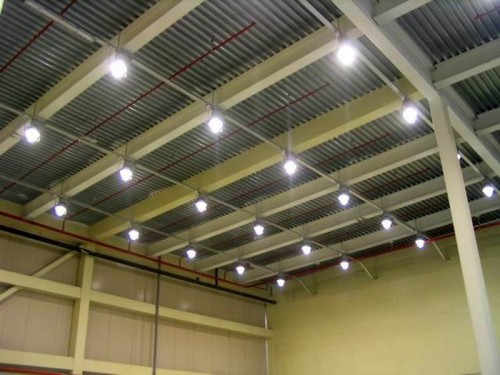
- Suspended - the ability to install on a hook, ceiling or mounting pipe on special suspended structures. Used in warehouses and in large rooms with high ceilings.
- Wall-mounted - installed on a vertical surface, like roommate.
- Portable - devices whose location can be changed if necessary. Portable explosion-proof lamp is used if the work is far from the main light source.