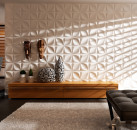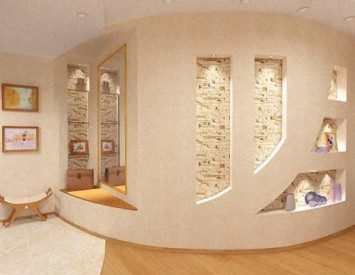
Beginning redevelopment in the apartment has to choose material for new walls, ceiling cover, floor alignment and other positive changes in the old interior. Many try to give preference to a budget option and pay attention to drywall. Opinions about building materials are different. This information view will help make an independent conclusion about the benefits and harm of drywall.
Content
History of the invention of plasterboard
Dry stucco invented in the USA. Accurate translation of the term with English Drywall - dry wall. At the end of the 19th century, the distinction of plasterboard was invented: a sandwich from several tens of layers of paper and layers of plaster. At the beginning of the 20th century, building material was improved and accepted the usual view for modernity. A little later added the design of the edges of dry plaster. The first manufacturer of plasterboard from Sweden began the release of a new building material for sale in Europe. 
Properties of drywall from the position of ecology
Composition of plasterboard:
1. Gypsum - natural mineral product. It is made from sedimentary rocks. By cleaning raw materials from impurities, grinding, drying at a temperature of 1800 is obtained by a gypsum powder.
2. Cardboard sheets performing the role of fittings. 
3. The gypsum mixture is poured between two layers of special card.
4. Cardboard sheets bend around the ends, closing the longitudinal edge of the sheets and forming a protective edge.
5. A peculiar form is attached to the special machine to the ends.
6. A plasterboard strip is made with a large mileage. The cutter apparatus cuts off from a solid tape sheets of standard length - 2.5 m.
7. Cropped standard sheets of drywall are sent to the drying furnace. 8. The finished product is packaged in the appropriate container. 9. Modern industry produces several varieties of dry plaster:
- normal plasterboard. Consists of cardboard and plaster layer. Gray cardboard is used for the surface. Blue color is applied on top. It is not impregnated with an organic or inorganic, absolutely harmless to health. Used for interior finishing works;

- moisture-resistant plasterboard. Sheets to drying are processed by a special anti-grapple and antibacterial composition that impedes intake. The sheet is distinguished by nice green color. Scope of construction of building materials: for bathrooms, shower, baths, any premises with high humidity;
- fire resistant plasterboard. Remedified by a grid with refractory properties. The sheet is withstanding the impact of open fire. Fiberglass is used as a protective refractory material. When combustion, the cardboard cover sins and retains structural integrity. The combustion process is not accompanied by the emission of carcinogenic volatile compounds;
- combined plasterboard. It is processed by a complex of remedies for wetting and combustion. Heavy metals or toxic additives are not included.
If products with additional protection are available on modern equipment from the manufacturer who complies with the established sanitary standards, then all additives will be investigated for compliance with security standards, with the provision of appropriate certificates to the buyer. The harmlessness of protective materials for ecology on the regulations of the European requirement is determined.
Plasterboard harmful properties
Harmful properties of dry plaster can occur in violation of technological processes. In cases of use by the manufacturer of non-verified substances or additives. When using mineral raw materials for gypsum from an unfavorable environmental situation. To learn the compliance of drywall standards and GOST, it is necessary when buying a material, to require the provision of quality certificates, conclusions of Sanitary services, acquire building materials in a reliable company or from a well-known manufacturer. It turns out that with the leading approach to the manufacture of plasterboard, harmful impurities and damage to health are excluded. 
Harm Hardware Health
When identifying the harmful effects of plasterboard on the body, attention should be paid to the operating conditions and the scope of construction materials:
- Work with plasterboard is inevitably connected with a sharp material. Dust, allocated at the same time, falls into respiratory organs. Permanent inhalation of gypsum dust leads to irritation of the mucous membrane and provokes the development of ARVI. Advice: Works associated with cutting, sharp, leaf drilling in the respirator. Upon completion of the work, remove the accumulated dusty garbage with a vacuum cleaner.
- Improper use of dry plaster. When using plasterboard of the usual composition for finishing walls, in wet rooms, the following process occurs: a nutrient medium forms in a porous structure under the influence of dampness for the vital activity of fungal and mold microorganisms. The formation of these colonies is harmful to the body, serves as a source of unpleasant "raw" or "basement" smell in the room.

- The performing of slopes of window openings from ordinary drywall leads to condensation of moisture in the inner cavity of the slope, the material is damage to mold. As a result, mycotoxins penetrate the apartment. They adversely affect the immunity, cause attacks of allergic diseases. Advice: Thoroughly think about the use of dry plaster, use building materials for purpose. Use moisture-proof drywall to finish the slopes of window openings indoors. If you treat the usual plasterboard with a fungicidal composition, then condensate will not spoil the appearance, does not deform the material and will not create conditions for the development of harmful microorganisms on the surface.
- Sometimes compounds of formaldehyde or phenol are found in the composition of the gypsumocarton. This is not a frequent phenomenon occurs due to the fault of the manufacturer. Choosing a material, do not trust cheap varieties of drywall, especially Chinese production. Domestic manufacturers always provide implemented products accompanying documents. Require certificates of conformity at the sales site.
Arguing about the dangers of drywall, consider specific situations, correctly apply the material for its purpose.
Practical tips how to reduce harparton harm
- Plasterboard is not recommended to be used in a closed, incredible space with a moisture level above the norm. For trim or finishing baths, saunas, shower, jacuzzi is better to apply another building material with high water repellence characteristics. Especially it is not recommended to use dry plaster in such premises to cover the mounted ceiling. Nobuhaya, material saves, deformed and can enjoy the whole design.
- For the construction or finishing of the attic floors, economic attacks use fire-resistant plasterboard with guaranteed resistance to high temperatures.

- By purchasing sheets, make sure the labeling on each unit. The factory material has a blue label. If there is no inscription on the surface or it is made with a faded pencil, give up the goods. Most likely, it is released without adherence to the GOST, is not certified or manufactured ill-quality.
- Sealing the seams at the place of the joint. Perform a special finished solution intended for internal work in residential premises. Otherwise, the source of harmful substances is obtained with the complete chance of drywall.
- For seaming of the seam, an elastic putty is the best material. It prevents the occurrence of a defective area in the design when changing the temperature regime, and therefore eliminates the possibility of the formation of mycotoxins.
- Carefully closeing the seams, provide sound insulation, remove the source of moisture penetration at the joint joints and prevent the fungal affix of the base.
- Technical plasterboard has an appearance similar to the usual dry plaster. The difference in the core between sheets. For the technical product, there is a bad processing gypsum. The surface of the sheet dispels microscopic dust particles into the air. Permanent stay in the room decorated with such material contributes to an allergic reaction, redness of the eyelid, the constraint of the nasopharynk. Use this type of drywall is recommended in non-residential rooms.

- In a well-ventilated room, plasterboard performs the function of the moisture regulator. The porous surface absorbs the surplus of moisture, and when the composition of the air is changed, the water pairs be selected into the surrounding space. Plan a good ventilation system, and the dry plaster will serve not only for the decor, but also for natural moisturizing or drainage.
- By installing partitions, openings, arches from drywall, carefully pick up the surface dye. It must coincide with the technical characteristics of dry plaster, do not change its porous structure.
Plasterboard harm and benefit
Analyzing the above information, it suggests the conclusion of the harmlessness of drywall for the decoration of the dwelling, a housekeeping, office or state institution. The main thing is to follow the recommendations of the use of the material. Check the quality of building materials before purchasing:
- Make sure the gypsum layer has white color, without gray inclusions.
- Ask to check the leaf on the break. Make an incision and bend the product through the line. High-quality plasterboard breaks strictly at the mark, the edges do not have broken, irregularities, gear peaks.
- Sheets with peeling cardboard surfaces indicate poor-quality goods.