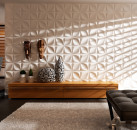
Due to high operational and aesthetic indicators, glass furniture is increasingly used not only in residential buildings, but also in commercial institutions. However, the use of glass furniture in the interior is associated with a number of features, in many respects due to the glass type used in the production process and methods of its subsequent processing. Considering these and other subtleties, you can minimize all the shortcomings of glass furniture and concisely enter it into any design room.
Content
Types of glass for furniture production
Not so long ago, glass was used only for the manufacture of various kinds of shelves, kitchen facades and other elements of the interior.

Today, the glass produces journal, dining, computer and office tables, couch, shelves, racks for equipment, racks, chairs that carry a certain load during their application. At the same time, glass can act as the only material in the manufacture of furniture and combined with metal, wood, plastic, leather. Depending on the purpose of this or that object of furniture or the components of its elements, a specific type of glass is used.

In most cases, the following glass varieties are used to create glass furniture:
- stalinite is a kalenic glass with high strength, resistance to sharp temperature differences, as well as mechanical effects. When splitting Stalinitis disintegrates on safe fragments with blunt edges, eliminating the possibility of random cut. However, upon completion of thermal processing, Kalenoe glass is not cutting, drilling, polishing. The cost of Stalinitis relative to other types of glass remains the highest;

- triplex is characterized by a multilayer structure comprising two and more glass with a polymer film located between them. When heated, the resulting layers are compressed, forming a monolithic material. Along with the usual, the decorative triplex was widely widespread, between the glasses of which is colored film, textured fabric, photography and other picturesque elements. With a strong impact, the triplex is destroyed into a plurality of small fragments, which are held by the intermediate layer in the form of a film, tissue, etc. The operational characteristics of the triplex only slightly inferior to the properties of Stalinitis, as evidenced by a fairly acceptable cost. In addition, the Triplex has high sound-absorbing quality and is easily reduced to additional processing in terms of drilling, polishing, cutting and other operations that are impossible when working with rotable glass;

- float glass has good strength indicators, as well as minimal optical defects and distortions. The perfectly smooth surface of float glass contributes to the application of a special film or a coating to give it additional advantages. In this case, resistance to temperature drops and power influence in float glass is small, as a result of which it is used for the manufacture of racks, shelves, furniture facades;

- the corrugated - stands out for the presence of a relief pattern on one side of the glass, as a result of which the light-resistant ability is entirely depends on the color solution and the nature of the pattern. The corrugated glass has an average degree of strength, and its damage causes the occurrence of traumatic fragments, so it is used more to create furniture facades.

Thus, most of the furniture is made from kanenic glass or triplex. At the same time, the corrugated or float glass often act as various decorative inserts, furniture facades and other components of the product. However, the aesthetic and some operational quality glass acquires during additional operations.
Glass processing methods
The effectiveness of glass furniture objects largely depends on the method of initial and additional material processing. In addition to cutting, drilling, polishing, quenching, glass is subjected to the following operations:
- sandblasting, so that any accuracy of the drawing appears on the glass or the mattness of the entire surface appears;

- lamination, in the process of which the glass acquires the necessary shade due to the coating with a special film. Often, for such purposes, a film is used with any pattern that gives a finished product of some originality or refinement;

- laser engraving that allows you to play the smallest details of any image, adjust the contrast of the image, as well as the depth of engraving;

- praying, by means of which the glass is attached to the necessary bending radius. A prayed (bent) glass has a shiny surface and is often used for the manufacture of furniture facades;

- ultraviolet gluing - is used to connect individual elements into a single product, giving compounds high strength and resistance to the external influence of the medium;

- applying ultraviolet printing - allows you to get any images or photograph in color format both on smooth and on the embossed surface.

The edges in glass furniture items are also processed, resulting in their rectinity, articularity or fats.

Thus, a variety of glass production methods with subsequent processing allow you to create glass products in exquisite and at the same time original design, which opens up wide prospects for design solutions, and also expands the borders of the use of glass furniture in the interiors of various style.
Advantages / Disadvantages of Glass Furniture
Despite the attractive design and a wide variety of models made from various types of glass, furniture subjects are inherent in pretty similar positive and negative sides, which are revealed only during operation.

The most significant advantages inherent in glass furniture include:
- diverse range of models differing in color, shape and sizes;
- the invariability of the appearance throughout the entire period of operation, since the furniture does not fade and does not succumb to deformation;
- combinability of glass with many finishes, as well as construction materials;
- waterproof, preventing the formation of various kinds of mold and fungi;
- environmental friendliness;
- transparency and reflective material quality make room lighter and cozy;
- easy to care during operation.

In addition, glass furniture contributes to the visual expansion of the surrounding space due to the ease and transparency of the material.

Among the main deficiencies should be allocated as follows:

- contributes to the appearance of unnecessary details (for example, the legs sitting at the table, or a mess in a glass cabinet, are viewed through a transparent countertop;
- the need for everyday care, since fingerprints and sedentary dust particles remain on the surface;
- the possibility of scratching, which is not subject to polishing and varnishing;
- a strong roar in the fall of metal objects on the surface;
- the high weight of finished structures leaves with the movement of furniture to a new place of dents on the outdoor coating;
- the high cost of furniture, depending on the complexity of the technological process of manufacturing glass, its subsequent processing, glass thickness and decorative intricateness.

Thus, despite the tempting characteristics and the appearance of glass furniture, the photo of which is presented in a considerable amount on the pages of the catalog of any furniture store, when making the interior, it is worth avoiding its excess accumulation in one room, in order not to be too cold interior.

Features of the use of glass furniture in the interior
The unique combinability of glass with various types of materials allows you to choose furniture for any room style. So, the frame or framing of furniture made of wood, more corresponds to the classic interior design.

At the same time, chromed and aluminum details of furniture in combination with glass correspond to High-tech style.

Furniture made of glass with elements of art forging perfectly fit into the style of Provence or Country.

Despite the style affiliation of a particular interior, the use of glass furniture is associated with some features, in many ways depend on the appointment of a particular object of furniture and place of its placement.

Glass furniture in the hallway
Due to the visual increase in the space glass cabinet, a shelf or a table with straight clear lines will be ideal for a small and narrow hallway.

For a spacious hallway, it is worth looking for furniture more complex design and shape.
Glass furniture in the kitchen
Among the glass kitchen furniture, the main place is occupied by a dining table. The greatest relevance of the glass table acquires in the conditions of the kitchen of small sizes, since even a large table will not seem so bulky due to the transparency of the material.

It looks great, the table, the legs of which are made of the same material as the frame of the chairs.

A table having a podstole in the form of a shelf and possessing a matte surface, allows you to hide the bottom of the body of the diners of people from the gaze.

Minimize the lack of canteen stalls will help unfolded napkins or special supports.

Glass furniture in the living room
Glass furniture for the living room is represented by a wide range of coffee tables designed to accommodate colors, household appliances, laptops, newspapers and other interior items.

Quite often in the living room installed cabinets, glass cabinets. However, the contents of these furniture items will not hide from the view of foreign people, so watching the order will have to constantly. At the same time, the best place to store collectible items or books is simply not found.

A new trend of modern technology is a chair completely made of glass. Such a piece of furniture will definitely become the main highlight of any living room.

Glass furniture in the bedroom
Make notes of romance and privacy will help glass cabinets in the headboard bed along with a small coffee table of the bizarre form from tinted glass. The wardrobe of glass with a matte surface will hob the inevitability of the appearance of fingerprints and visually make the room spacious and lighter.

Glass furniture in the bathroom
As a rule, the bathroom does not differ in a large area, and the cabinets and shells made of wood create the effect of clutter and without that small room. In addition, a tree in conditions of high humidity swells over time, losing originally attractive appearance and becoming a place to reproduce harmful microorganisms. Avoiding these drawbacks will allow the furniture glass for the bathroom in the form of a bedside table under the sink or a mounted locker, which will give the interior lightness and sophistication. At the same time, minimizing the traces of aquatic spray, as well as a small disorder, is capable of furniture made of matted or corrugated glass.

Thus, the interior design with furniture made completely either partially made of glass requires the thoughtfulness of the style of the style, since incorrectly selected parts can easily distort the geometry of the room or reduce the aesthetic effects of furniture.