In modern conditions, the task of achieving the right quality of water is particularly relevant. It can come to the end consumer from different sources. Artesian wells, mountain streams, surface waters, as well as sea water after despatching processing are in their quality. It is necessary that it is transparent and odorless to be transparent and does not contain in the composition of pathogenic microbes, as well as impurities, suspension of solid particles and solutes that cause a precipitate. In addition, the content in water for drinking, domestic needs and industrial use of harmful chemical compounds should be monitored. Before its feed requires preparatory processing, including filtering, respectively, the purpose of water.
Content
Water filtration methods
Filters are applied in the following cases:
- for demineralization, as well as neutralization of pollution;
- for clarification from the sludge and sand of water - when fence it from rivers and lakes;
- to bring to the acceptable quality of tap water;
- for water that worsened its characteristics during processing and use;
- for final processing before returning to the natural cycle.
With the help of filtering, the water remove a variety of suspended garbage particles, leaves, clay and sand, rust and slags to protect the water distribution network (pipes, sanitary equipment and locking valves) from clogging and corrosion, the appearance of deposits in the form of an insoluble laid.

In modern systems of water treatment and water supply to ensure purity and safety of water, a comprehensive cleaning is carried out:
- passing through water filtration systems in the form of special cleaning modules containing the filter layer (gravel and rubble, sand, anthracite, etc.) - sometimes in combination with biological filtration (using anaerobic bacteria, which are grown on crushed);
- through cassette filters, as well as mechanical filters with mesh elements.
In addition to mechanical cleaning, there are also the following water filtration methods:
- Chemical - their principle of operation is based on the conduct of chemical reactions.
Chemical reagents are added to water to remove contaminants by decomposition, neutralization, or transformation and sediment and the filter delay.
Chemical water filtration effectively softens the water, normalizes its acidity, as well as the content of iron, a variety of salts, manganese, free chlorine, organic compounds, bacterial impurities. This method is not suitable for drinking water.
- Physical methods:
- method of reverse osmosis - with the help of polymer membrane filters with smallest holes that transmit only water and oxygen molecules;
- ultraviolet radiation - effectively sterilizes water, killing pathogenic bacteria;
- water thermoemium - salts of rigidity are destroyed by boiling and fall into precipitate.
- Physico-chemical methods combine the benefits of physical and chemical methods:
- using the flotation effect - to filter wastewater through a liquid weight of the drains, the gas formed foam with contaminants is removed;
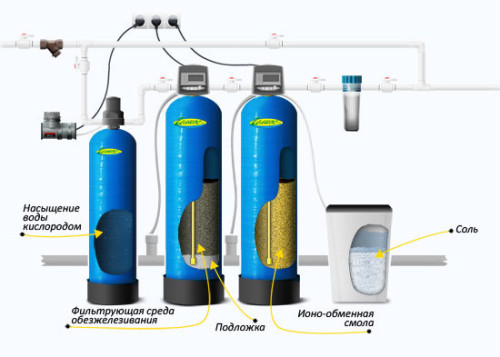
- the method of ion exchange is a filtering through a snowing in the form of an ion exchange resin. Due to the chemical reaction, the structure of water changes, its softening occurs - the salts of rigidity fall into the precipitate and are filtered out by mechanical path. This method is not suitable for obtaining drinking water;
- with the help of electrocoagulation - under the action of electrolysis, colloid particles and suspension occurs.

Filtering equipment
In modern conditions, multilayer filters for water purification, consisting of several layers with certain functions, are increasingly used, while the water is passed sequentially through the thickness of the filter layers. Such cleaning significantly enhances the speed and efficiency of water treatment.
Today, the use of water filtration systems for home and apartments is no longer luxury. In the modern environmental situation, specialists strongly recommend using home filters for cleaning drinking water.
Filters for home
To make a decision, which system of water filtration to buy, first of all, it is necessary to order the analysis of water from the well, well, or a water supply network - to determine the degree of saturation impurities. Based on the results obtained, you can choose filtering plants to remove various impurities, imparting cleaning water and safety, as well as to protect household appliances and sanitary equipment from pollution, scale deposits and subsequent breakdowns.

A variety of filters for cleaning drinking water are presented:
- filters-jugs are small and mobile filters that provide protection against certain types of contaminants. Differ in the low price;
- flowing filters installed on individual cranes, as well as installed under the sink - will provide need for purified water for several people. The quality of such cleaning and resource cartridges is higher than in the filters-jugs;
- integrated water filtration systems for home are more expensive and complex systems that ensure filtering up to 99% of pollution. Among them, manufacturers offer plants to multipurpose water purification by reverse osmosis method - for example, ATOLL water filtration systems.
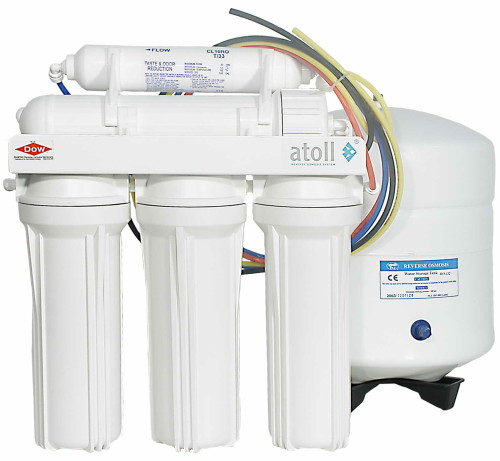

Such filtration includes:
- preliminary preparation of water in the form of water purification from chlorine, pesticides and organic organics, mechanical contamination of up to 1 MK;
- transmission through a semi-permeable polymer membrane of fine cleaning;
- final filtration through a coal filter.

Flowing filters on a separate crane can be installed in any home. These systems are distinguished by a successful relationship ratio and price, significantly improve the quality of drinking water, effectively purify it from a variety of contaminants. The method of three-level cleaning implemented in water filtration systems allows you to preserve the natural degree of mineralization in soft water, and rigid - effectively soften. Currently, this method is used by many manufacturers.
Filters for wells
For well-kept water, natural bottom filtration of drinking water is traditionally used with a layer of non-toxic and insoluble materials (gravel, rubble, sand, pebbles, shungitis, jadeite, etc.) - they are placed on the bottom of the well during construction.

In addition, the wells for wells are widely used by the bottom soil filters from geotextiles (polypropylene fibers) and cassette filters that can cope with such types of pollution as pesticides and a variety of chemical impurities.
Pool filtering in the pool
The specificity of the basin is such that purification from fine garbage, bacteria and microorganisms, as well as algae, causing water flowering, organic substances. To maintain the level of sanitary and hygienic state of the pool, it is necessary to equip the filtering system. Purification of water in the basin from the garbage is made using filters through which water is gradually being passed. In this case, water circulation supports a pump with a pre-cleaning filter in the form of a basket with large cells to desert garbage.

The pools use the following types of filters:
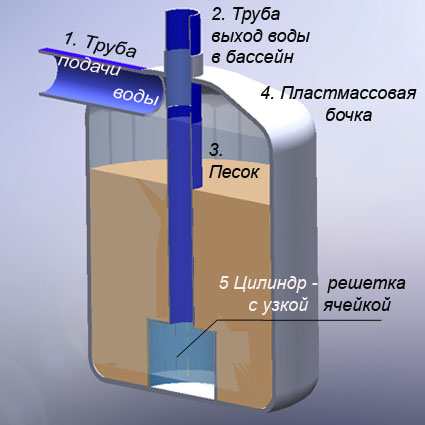
- sandy - with a filtering pillow of sand without clay additives. The efficiency of garbage filtering, as well as the filtration load depends on its grain. In such filters, quartz sand is used (the graininess is recommended 0, 45-0.55 mm), as well as glass sand. The presence of a six or four-position crane allows you to rinse sand without replacing it. When buying a sand filter, pay attention to the availability of removable cranes;
- multilayer filters - in the form of two or three layers of mineral backfills of various grainability, decreasing in the direction of flow of water flow. First, large garbage is filtered off, and then smaller;
- cartridges - in the plastic or metal case there is a petal replaceable cartridge that needs to be changed as contaminated;
- combined filters - for disinfection and enrichment of water as part of water filtration systems in the pool use various installations, allowing omnation and ionizing water containing cartridges with bromine, chlorine or iodine. Such systems, depending on the design, can simultaneously perform several functions - disinfection, enrichment and filtering.

For home pools of small size (up to 10 m 3) The use of filter cartridges is allowed, with an increase in water, the use of a sand filter is recommended, as well as water disinfection methods.