The substrate for the finishing floor covering is responsible for the multiple operational characteristics of the latter. So, with it any material will last longer, so if you decide to make high-quality overhaul, it is recommended to use a floor substrate.
Content
Characteristics and appointment of substrate
Today, in the building materials market, you can find a lot of flooring options, each of which has its own features of the installation, but often a prerequisite is the presence of a substrate. Its appointment is to provide additional heat and sound insulation, alignment of the floor, the gain is not enough hard coating, for example, cork floor. But whatever the floor material, it is necessary to choose the right one.
The substrate is recommended for mounting laminate, parquet, tile, linoleum and carpet. Otherwise, the coating can lie unevenly or quickly lose its qualitative and aesthetic characteristics.

Why should we put the substrate:
- Additional soundproofing - the substrate almost completely dries noises that run out of the floor below (relevant, if you have noisy neighbors or small children live in the apartment).
- Additional thermal insulation - in winter, even the tiled floor mounted on the substrate will not be too cold (relevant for apartments located on the first floor).
- The floor installed on the substrate will never publish creaks when walking. In addition, if small litter or sand falls between the elements of the laminate, the substrate will absorb all the sounds of friction on the floor.
- Increase the operational period of flooring, especially laminate. The substrates for laminate have a moisture-resistant membrane, which reliably protects the flooring from absorbing moisture.
- Smoothing of irregularities and defects of rough floors - often in the construction of apartments, errors are allowed, which leads to a minor curvature of the floor and walls. It is unnoticed by the naked eye, but becomes apparent when laying laminate, tiles or linoleum.
Substratus thickness
There is an erroneous opinion that the larger the thickness of the substrate, the better. However, if the floor has clear defects or potholes, even the thick substrate is unable to fix it - it is necessary to make a preliminary screed of the surface, equip the bulk floor or clamping the floor plywood.

Thick substrates "work" only if we put them on a permanent smooth surface. Then they guarantee excellent thermal insulation and noise absorption, but in this case there are nuances. Thus, thick substrates are deformed faster and stronger than thin, which leads to defaults in places of large loads (from large furniture). The optimal variant of the substrate thickness for laminate, for example, is 2 mm.
Substrate under laminate
Laminate is quite thin, but tough and durable coating, so it is recommended to lay it on a pre-prepared substrate (better multi-layered). There are several types of substrates specifically for laminated floors, each of which has its own advantages and disadvantages. From the selection of the substrate directly depends on the service life of the laminate, so if you decide to establish an expensive floor covering, it makes sense to purchase the highest quality, albeit the cheap, substrate. What kind of laminate substrate will be best?

In addition, the substrate affects the appearance of the floor and the microclimate indoors.
What to pay attention to when choosing a substrate for laminate:
- the material from which the draft floor is made;
- condition of the draft floor;
- the need for prior shockting;
- the level of humidity in the room;
- the cost of the substrate;
- operating characteristics of the substrate material.
The same requirements apply for a parquet substrate.
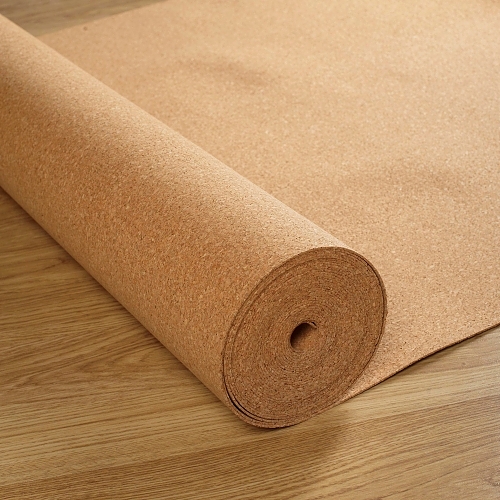
Cork-tree
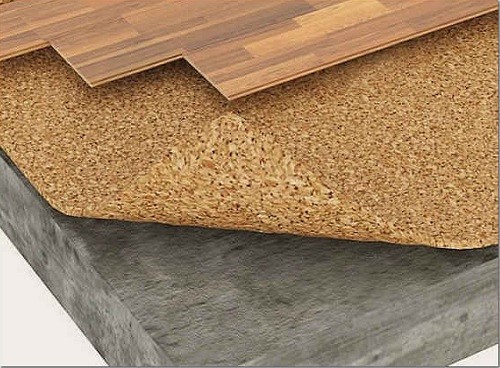
The substrate under the cork tree laminate is the most expensive and highest quality option. It is made of crushed and compressed cortex cork oak. A natural adhesive substance is present in the cortex - suberin. It gives a strong connection of pieces of material, providing homogeneity of the coating. The main advantage of the cork substrate is its absolute environmental friendliness, so this option is suitable for those who can advocate the health of households and cares about the state of the environment.

The substrate for laminate from the tube can also be used as an excellent finishing material for the ceiling and walls. It is very wear-resistant and is able to serve from 150 to 200 years without overhaul. In addition, even an inexperienced person without assistance will be able to paint and mount it.
The substrate has a porous structure, which guarantees natural floor ventilation and a comfortable microclimate indoor. For the same reason, the weight of the cork material is very small, so you can save on transportation.
Advantages of cork substrate:
- durability;
- environmental friendliness;
- low weight;
- porous structure - this gives not only natural ventilation, but also provides reliable heat insulation;
- noise absorption;
- preservation of the form at the edges during laying;
- alignment of the floor surface;
- moderate depreciation.
The cork substrate could be called impeccable for any flooring, if it were not for a significant disadvantage - with long-term heavy load, it is pushed. If you use a classic substrate from a genuine plug, about the heated floors are better forgotten because it has low thermal conductivity. In order to maximize the deformation of the material, it is recommended to use a substrate with a foil layer.
Another nuance that should be taken into account when choosing a cork substrate - it cannot be installed in rooms with high humidity, without conducting work on the additional waterproofing of the floor. But it is better to give preference to special moisture-resistant substrates, not risking to spoil a costly natural plug.
There are several types of cork substrate depending on the components used as part of:
- Classical - the material is made only from the natural crumb of the cork of the cork tree. As a binder, natural adhesive and a synthetic resin gram is used. Such a substrate is absolutely hypoallergenic, so it is perfect for the children's room. It does not burn and does not produce static electricity.
- Bituminous-cork - a substrate made from a layer of cardboard or tight paper, one side of which is caused by bitumen, and to another - extruded plug. The bituminous substrate has high waterproofing characteristics, so it can be used for the bathroom. It will not only protect the floor from the water, but also will be elected the dampness from the laminate. To drain the substrate for the laminate always follows the bitumen layer, and the joints stick to a wide chest.
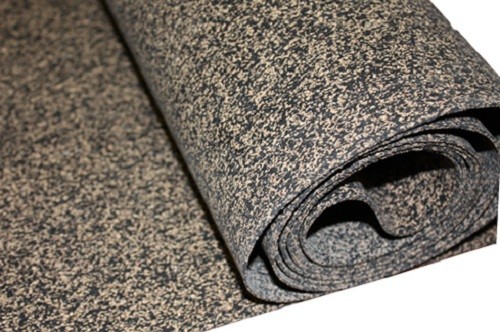
- Rubber-Cork - This option will like those who want to organize high-quality floor insulation. The substrate is a mixture of synthetic rubber and a shallow cork crumb. Its value significantly exceeds the classic cork form.


Before stacking a cork substrate, a number of preparatory work should be carried out. Unpack the material and leave it in the room in which you will do repair, for a day so that it adapts to a new microclimate.
Features of laying cork substrate:
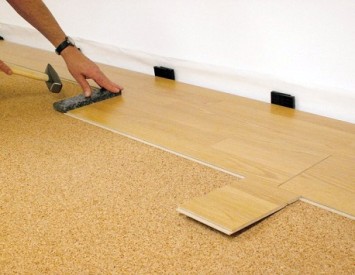
- In order for the substrate does not shift relative to the laminate, lay it on the line of the board. To begin with, clean the concrete floor and cover all potholes, if any.
- Treat the floor with antiseptic primer to prevent the occurrence of fungus and mold (after all, the cork is organic natural material).
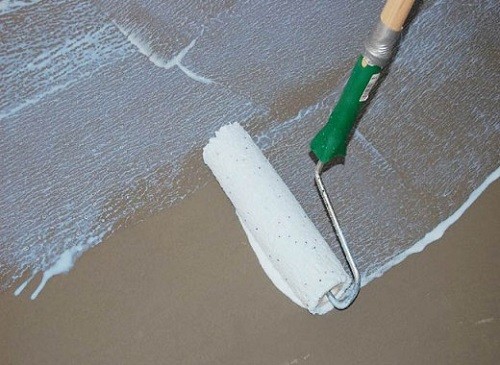
- If you use a classic substrate, it is recommended to put at least minimal waterproofing. To do this, use a polyethylene durable film. Cut it on the flap, equal to the width of the room, taking into account the allen on the walls of 2.5-2 cm (excess then can be trimmed). Place the flap of therapy on each other by 10-12 cm. Use only the adhesive adhesive tape to connect to the connection, but in no case the stapler or nails, otherwise the price will be such a waterproofing. When laying a laminate on a wooden floor, waterproofing is optional.
- Place the slabs of the cork substrate tightly to each other, but without the allen. Joints connect a scotch with a width of 6 cm. Sheets, adjacent walls and threshold, should be located from them at a distance of 1 cm.

Important moment: Do not lay the substrate in several layers, even if it is very thin. By this, you not only do not improve the characteristics, but contribute to the speedy coverage. The classic "clean" cork substrate is suitable only for dry rooms, such as living room, children's or bedroom.
Polystyrene substrate
The polystyrene foam substrates are particularly popular in the domestic market, since they are the perfect value for money. They effectively absorb extraneous noises from the outside and "quenching" the sound from the steps along the laminate, retain the form well, serve good additional thermal insulation. And that the most pleasant for the Russian economical consumer is inexpensive.
The material consists of a foil layer and polystyrene, but one-layer extruded substrates can be found. The polystyrene foam plates are convenient and easy to install even alone, they are suitable for laying on the "warm floor", well hide surface irregularities, but over time they can be deformed from constant heavy loads (pushed from furniture).
Polyenethylene substrate
There are several types of polyethylene substrates that are excellent in the way of foaming, but have about the same operational characteristics.
From the advantages of this type of substrates, excellent hydrophobicity, low thermal conductivity, immunity to the effects of chemicals, mold, low weight, low cost are possible.

Unfortunately, deficiencies in polyethylene substrates are about the same, so many advantages:
- small life;
- quickly lose the form;
- sensitivity to ultraviolet;
- suitable for laying only on a platform;
- can be used to lay inexpensive laminate.
However, low cost and versatility makes this kind one of the most sought-after markets. Polyeneetylene allows to significantly reduce temporary and financial costs during repair.
Substrate under linoleum
It is difficult to find more common, especially in our latitudes, flooring than linoleum. It is invariably present in every house since the time of the heyday of the USSR and continues to spit on an enviable speed and constancy. However, few people know that there is little only just to store the bare concrete floor with linoleum. So that he served for a long time and brought the maximum comfort, you need to choose the correct substrate.

The substrate for linoleum should perform two main tasks:
- Align the base - you can only put the linoleum on the perfectly smooth floor, so if you do not want to make a screed, it is recommended to purchase a substrate.
- Warm - even the most qualitative and expensive linoleum with a warmed interlayer will not give the necessary comfort in winter, especially when it comes to the apartment on the first floor. The substrate will provide additional thermal insulation of the floor without large financial costs.
Types of substrates under linoleum
Today in specialized stores you can find thickened linoleums with an already built-in substrate. Naturally, for such material, the additional layer is not required.
In other cases, one of the three substrate options can be used:
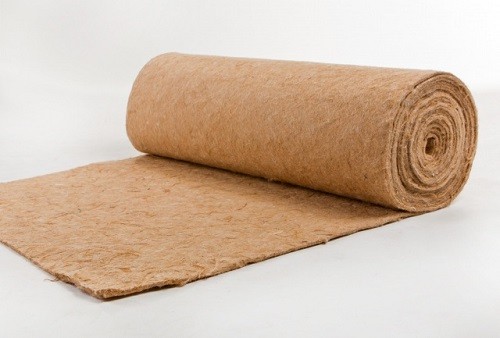
- Jute - substrate from natural jute fiber, compressed and processed by the flame retardant, which protects material from fire and rotting. The jute canvas can take an excess moisture from linoleum, without wet.
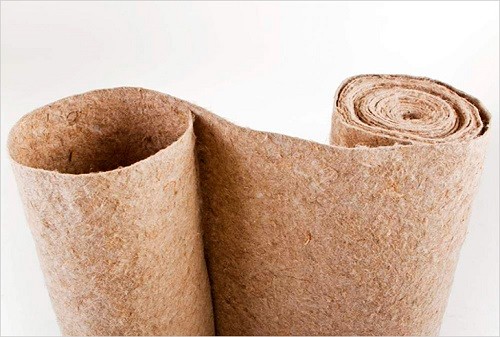
- Linen - another substrate under the linoleum of fully vegetable origin. It is capable of maintaining natural ventilation indoors, thereby preventing the appearance of fungus and mold. An environmentally friendly coating treated with the antipyrene composition (insects do not come, it is not lit).
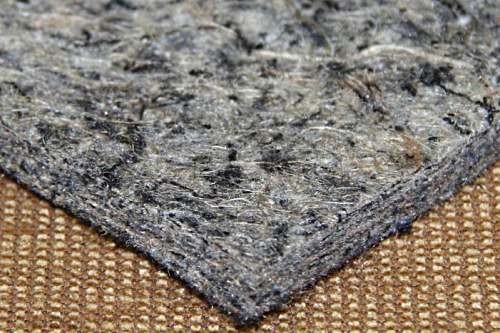
- Combined - canvas, which includes jute fibers, flax and wool. Such a substrate gives a very warm and dry base under linoleum. Differs wear resistance and excellent thermal insulation properties. The most popular type of substrate from all listed.
- Cork - a similar substrate is used for laminate, and for tile. Characteristics and features are described in the previous section. If you want to lay a linoleum on a cork cover, consider that both materials are rather soft, then the load from heavy furniture will quickly sell the plug and deforms it, so it is recommended to purchase rubber pads on the legs.


Substrate under carpet
If, in the case of a laminate or linoleum substrates, there are nevertheless material, then when laying the carpet, for some reason they are completely forgotten. Meanwhile, the substrate guarantees not only an increase in the timing of the coverage, but also makes it much softer and comfortable when walking. Even the thinnest carpet, laid, say, on a cork substrate, will be warm in winter. By the way, this is a good option, if you want to save and not buy expensive thick carpet.

Advantages of substrates for carpet:
- The service life of the carpet is extended by 2-3 times.
- Additional depreciation removes the load from the legs when walking, makes the surface of the floor is less traumatic, if small children live at home.
- Carpet coating longer remains whole and is not erased, as the substrate takes part of the load on itself.
- Noise absorption.
- Gigroscopicity.
- Additional thermal insulation.
- Alignment of the deformed floor without a cement screed.
How to choose a substrate
Before you give preference to any substrate, it should be understood in the common characteristics of the material. The base under carpet should be dense, but rather elastic to ensure depreciation, it should be preserved the form as long as possible and if possible not to be too thick.
The optimal thickness of the substrate is from 5 to 10 mm. It is desirable that the material has a porous or fibrous structure and passed the air to not disturb the natural ventilation in the room and not accumulate dampness. Otherwise, the mold can quickly appear under the carpet.
Before buying, take into account the degree of load on the floor - how much and what furniture will stand in the room.
Under the carpet uses the following types of substrates:
- Polyurethane foen - used not only in residential buildings, but also in offices and hotels. Very common material due to its cheapness and practicality. It guarantees almost 100% noise insulation, it is well holding heat, masks sex defects and creates the most comfortable conditions.
The polyurethane foam substrate must be laid on the pre-prepared floor - stripped and dry. Sheets are mounted tightly to each other, missing the base with glue.
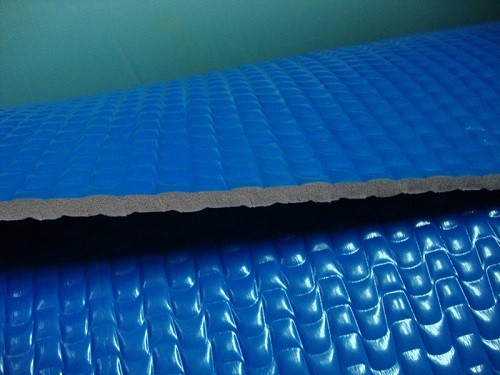
- Polyurethane are very soft substrates on a paper basis and with felt warm riding. Perfectly align the floors, give extra thermal insulation. Suitable for children's, bedrooms and living room.
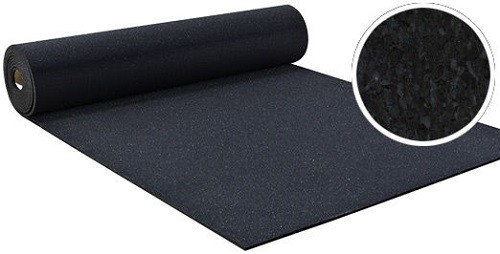
- Rubber - substrates made of fine pressed rubber crumbs. Very dense and firm, so more suitable for the hallway, living room or hall. Mainly used to lay carpet-based carpet. A rubber substrate provides additional hydro and noise insulation better than any of the above.


The bulk floor is always an excellent alternative to any substrate, albeit not the cheapest. Make it quite simple and on your own. Read more about the specifics of work in the article. "Self-leveling bulk sex with your own hands"
Substrate Laying - General Recommendations
Each type of substrate has its own characteristics of the styling. Typically, all the necessary information is described in the instructions attached with the goods, or on the package itself. Finally, we suggest you familiarize yourself with the general recommendations for laying a substrate for flooring (whatever it is).
How to lay a substrate:
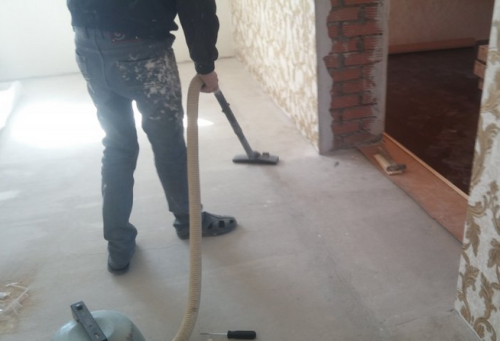
- Carefully clean the floor from all kinds of pollution, tubercles and fasteners.
- If on the surface there are potholes, cover them and wait for drying.
- Get trash, after which we spend the concrete floor.
- Cover the surface of the disinfectant primer, so that under the substrate (especially if we are talking about natural material) did not start "livestock": mold, mushrooms, insects.
- Place a vapor insulating membrane or a conventional dense polyethylene film, covering the entire surface with a small adhesive on the walls of 2-3 cm. The joints are punctured with a wide scotch with the allen 20-25 cm.
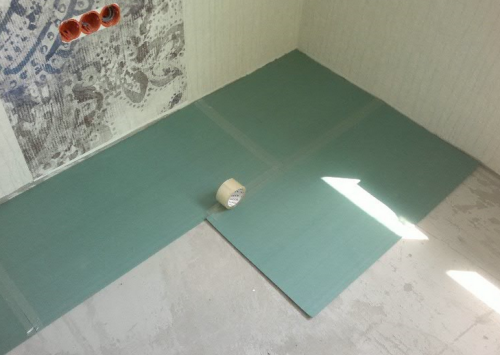
- On the entire perimeter to film the damper tape, which will subsequently compensate for the expansion and shrinkage of the wooden elements of the laminate.
- Since most often the substrate is produced in rolls, you should immediately cut it on the desired number of parts. Place the strip on the floor, in the most tight to each other and the walls.
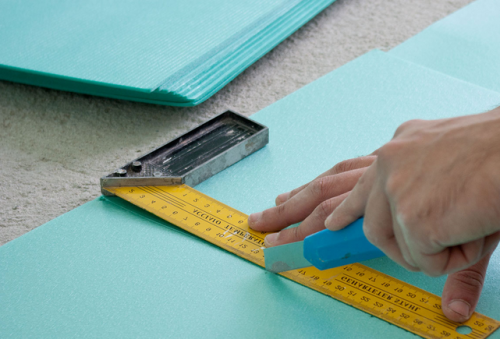
- If you bought a substrate in the stoves, lay them always with a smooth side upstairs in a chess and connect a wide scotch.


Useful advice: If you made a floor tie to alignment, determine whether it dried or not, it is possible to cover it with plastic overnight, and in the morning, check whether condensate has been formed on it. If yes - the screed should still be given time for drying, because it is impossible to work with raw concrete. We hope this article helped you figure out how to properly drain the substrate.