The area of \u200b\u200bthe wall in the working area of \u200b\u200bthe kitchen is most susceptible to pollution. Spray of water from washing or hot droplets of oil from frying pan eaten into the walls and are seriously cleaned. To facilitate cleaning and decorative purposes, a kitchen apron is equipped.
Content
The original and practical apron in the working area can be one of the main kitchen jewelry. The style and design of the apron for the kitchen is selected taking into account the overall interior. Materials apply a wide variety. The most common tile is, but also applies protective panels from MDF, plastic, glass and other practical materials. Pick up the design of the apron for the kitchen is not difficult, guided by the photo from the Internet.
Types and materials for kitchen aprons
Traditional is an apron for a kitchen made of ceramic tiles. The advantages of such apron include resistance to water, chemical detergents and temperature differences.

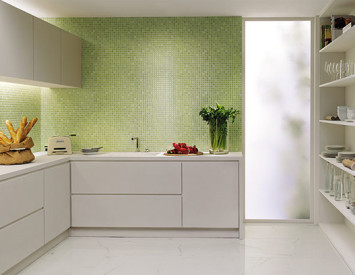
- Ceramic tile is easily washed and very durable. You can choose a tile of any color and size. It looks beautiful, the apron of tiles, trimmed with a contrast or selected by tone edge. Frequently used for inserts special decorative tiles and panels.
- A protective apron of glass is a fairly new, but promising direction in the sphere of kitchen design. Beautiful and sophisticated patterns are applied with sandblasting machines on the surface of glass panels using laser technologies. Such aprons are performed with a solid web, and there are no joints on the panels. Glass is neutral to any chemical stimuli, and the absence of jacks facilitates sanitary processing. The glass panels are quite expensive, and to the selection and installation reasonably attract a specialist.
- Inexpensive will cost a apron for a kitchen of plastic. Decorative plastic panels mimic ceramics, wild stone, ceramic tiles, etc. Installation of panels is performed quickly and is not much labor. Plastic panels possess a lot of positive qualities. They weigh little and are easily replaced in case of damage. The only minus of plastic panels is not recommended to use abrasive cleaning substances. The occurrence of scratches or scratching of the facial layer is possible.
You can stop your choice on the kitchen apron from the MDF panels, mirror-colored cloths or scored from mosaic smalt.
Staying kitchen apron from ceramic tile
Equipping the apron for the kitchen, dimensions are determined on the basis of expediency. For glass or mirror panels, dimensions are specified in production.

- By mounting the apron alone from the ceramic tile, the length is determined by the location of the washing and the kitchen plate. In the height of the apron make a slice cover of the plate. Approximately 55 cm from the work surface or 1.5 meters and higher from the floor.
- The surface of the wall is prepared for the installation of ceramic tiles. On the wallpaper, paint or other finishing materials and old plaster to the base are removed on the wallpaper, paint or other finishing materials. The site is aligned, and in the panel houses with concrete walls, you can apply an old ax or chisel to apply a Christmas tree.
- The tile is glued from the bottom corner. On the back side is applied with a spatula glue for a cement-based tile and leveled with a spatula. Plastic crosses are installed for creating smooth seams.
- Having exhibit 8 - 10 tiles, check them out the layout of Waterpas, exercise the seams and allow the glue to grab. Move and align ceramic tiles can be 18 - 20 minutes. Then continue to lay out with small interruptions to set glue and checking the correctness of the laying.
- Crosses remove as the adhesive solution grappling and drying. Clean the tile in the process of laying with adhesive solution. The next day they are engaged in the grout of the seams. The grout for seams is selected, harmonizing the color, color of the companion or contrasting. The contrast tones of the grouts are used in the case of perfectly smooth seams. Harmonizing with tiled color of the grout is used to conceal the distortions and other flaws when laying.

For grouting seams, a steel or rubber spatula is used. For wide seams, the extension is sometimes used.
Installation and installation of panel aprons for kitchen

- Aprons for a kitchen made of plastic panels, MDFs, lining or other similar materials are installed at the same diagram. The height and contour of the apron for the kitchen from the panels are planned taking into account attached lockers and kitchen furniture.
- The kitchen wall is mounted a doomle - frame for fastening panels. The lamp is made from a wooden bar or profile rail. When the timber selection, the thickness of the bar itself and panels is taken into account. To save space, the dog is deepened in pre-punched grooves.
- Profile mounting rails are attached to the frame, which are installed panels. Fastening is made on mounting screws or special locks.
- Frameless installation of plastic panels is made on suitable glue or liquid nails. Choosing for kitchen apron materials, check the hygienic and high-quality certificate.

Before starting work, you can see the installation process of the apron for the kitchen, the video is at the end of the article. Installing glass or mirror panels for kitchen apron better entrust professionals. When installing such panels, there will be a lot of specific nuances and one pair of hands will be little.